
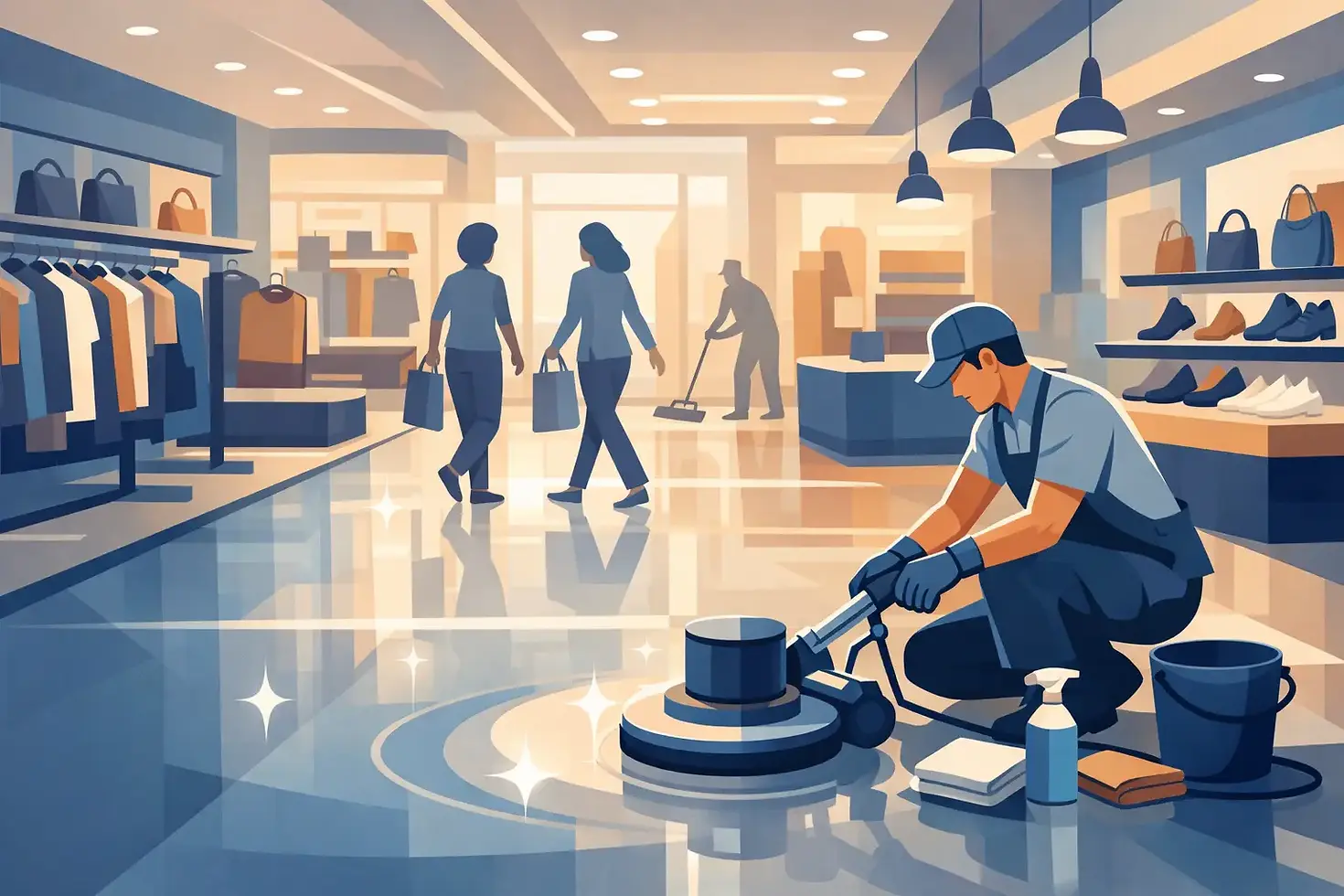
Retail Floor Restoration for High-Traffic Stores
A scuffed entryway, cloudy tile, or worn path from the front door to the checkout can change how customers read the entire store. Retail floor restoration addresses that visible wear at its source, bringing back a clean, professional finish while helping protect the flooring beneath it. For high-traffic stores, this is not simply a cosmetic project. It is a practical part of maintaining a safer, presentation-ready environment.
Why Floors Wear Down Faster in Retail Environments
Retail floors take a concentrated amount of abuse in a small number of areas. Customers follow predictable paths through entrances, aisles, fitting rooms, registers, elevators, and restrooms. Carts, rolling racks, deliveries, wet shoes, street grit, and frequent cleaning all add to the wear.
Over time, abrasive debris scratches the finish and dulls its appearance. Moisture can leave stains or cause flooring materials to deteriorate at seams and edges. When a floor loses its protective coating, routine mopping may remove surface soil but will not restore the clear, even finish the space had when it was new.
In a competitive retail setting, details carry weight. A clean floor reinforces organized merchandising, well-maintained fixtures, and a thoughtful customer experience. A worn floor can make even an otherwise spotless store look neglected. For property managers and facility teams, the issue is also financial: restoring a maintainable floor at the right time is typically more cost-effective than allowing damage to progress until replacement is required.
What Retail Floor Restoration Actually Includes
The right service depends on the flooring material, its condition, and the level of traffic the store receives. A detailed assessment should come before any machine touches the floor. Using the wrong chemical, pad, or coating can permanently damage certain surfaces, especially newer luxury vinyl products and specialty finishes.
Deep machine scrubbing
Machine scrubbing is often the right first step when a floor is dirty, dull, or marked but still has enough protective finish remaining. A commercial floor machine, matched pad, and appropriate cleaning solution lift embedded soil that daily mopping leaves behind. Corners, edges, baseboards, and areas under movable displays still need meticulous hand detailing.
For many stores, periodic machine scrubbing keeps the floor looking sharp between more intensive restoration services. It can also help facility managers identify areas where finish is thinning before they become a larger problem.
Strip and wax for resilient flooring
Vinyl composition tile, commonly known as VCT, remains common in back-of-house areas, retail corridors, grocery environments, and older commercial properties. When the finish becomes yellowed, scratched, uneven, or difficult to clean, a full strip and wax may be appropriate.
During this process, technicians remove the old layers of finish, thoroughly rinse and neutralize the surface, allow it to dry, then apply new coats of commercial-grade floor finish. The goal is not just shine. Properly applied finish creates a more even protective layer that makes daily cleaning easier and helps shield the tile from traffic and staining.
This work requires careful sequencing. Floors must be dry before finish is applied, and each coat needs adequate cure time. Rushing the process can create streaks, trapped debris, peeling, or a soft finish that marks quickly under traffic.
Scrub and recoat for a targeted refresh
Not every dull VCT floor needs a full strip. When the existing finish is still sound but visibly scratched or worn in traffic lanes, a scrub and recoat can provide a faster, more economical refresh. The existing top layer is prepared through controlled abrasion, thoroughly cleaned, and recoated with new finish.
This approach can extend the life of the floor finish while reducing downtime and avoiding the intensity of a full stripping project. It is not the right choice if there is severe buildup, yellowing, adhesion failure, or deep staining. A professional evaluation helps determine whether restoration can be limited to a recoat or whether the floor needs to be stripped back completely.
Specialty care for concrete, tile, and LVT
Concrete floors may benefit from machine cleaning, stain treatment, polishing, or densification, depending on the desired appearance and the condition of the slab. Polished concrete can deliver a clean, modern look, but it requires the correct equipment and a process tailored to the concrete's hardness, existing coatings, and level of damage.
Ceramic and porcelain tile often need deep cleaning of grout lines and textured surfaces rather than wax. Applying floor finish where it does not belong can create a slip concern or leave an unnatural appearance. Luxury vinyl tile and plank also require special care. Many LVT products should not be aggressively stripped or coated without confirming manufacturer guidance. The safest plan is one built around the specific material, not a one-size-fits-all floor service.
Signs Your Store Is Ready for Floor Restoration
The clearest sign is a floor that still looks dirty immediately after routine cleaning. That usually means the issue is not loose soil but worn finish, embedded grime, or a surface that has become too porous to clean effectively.
Other common indicators include visible traffic lanes, black heel marks that no longer lift, yellowing near edges, uneven shine, sticky residue, scratches around registers, and a rough feel underfoot. If the floor looks noticeably better only when it is wet, its protective finish is often overdue for attention.
Safety deserves equal consideration. A worn or improperly maintained floor can create inconsistent traction, especially around entrances during wet weather. Restoration should be planned with the flooring type, cleaning products, slip-resistance needs, and business operations in mind. High shine alone is not the standard. A clean, even, properly maintained surface is.
Planning Retail Floor Restoration Without Disrupting Sales
For active stores, the quality of the work matters just as much as how it is scheduled. Floor restoration is often best completed overnight, before opening, after closing, or in carefully managed sections. The right plan protects customers, employees, merchandise, and access routes while allowing the work to cure properly.
Before service begins, a reliable provider should identify furniture and fixture movement needs, delivery schedules, sensitive equipment, floor drains, and areas that cannot be blocked. In larger stores, restoration may be phased by department, aisle, or zone. This can reduce operational disruption, although a phased project may take longer and require careful attention to blending between sections.
Store teams also need clear expectations about dry times. A newly finished floor may look ready before it has cured sufficiently for foot traffic, carts, or heavy displays. Protecting that curing window is one of the most important ways to preserve the finished result.
Daily Maintenance Protects the Restored Finish
Restoration delivers the reset. Consistent maintenance determines how long that reset lasts. Entry mats should capture grit and moisture before they reach the sales floor, and mats need regular cleaning themselves to remain effective. Daily dust mopping or vacuuming removes abrasive particles before they are ground into the finish.
Neutral floor cleaner, clean mop water, and properly maintained equipment also matter. Overusing chemicals can leave residue that attracts more soil and dulls the surface. Harsh products may weaken floor finish or damage material-specific coatings. High-traffic zones often need more frequent attention than the rest of the store, especially entrances and checkout lines.
A practical maintenance plan typically combines daily service with periodic machine scrubbing and a scheduled recoat or full restoration based on traffic, weather exposure, and the flooring system. A busy Manhattan storefront may need a different cadence than a low-traffic showroom in Long Island. The goal is to act before the floor reaches the point where restoration becomes more labor-intensive and costly.
Choosing a Commercial Floor Care Partner
Retail floor work should be performed by a team that understands both appearance standards and operational realities. Ask how the provider identifies flooring materials, what process they recommend, how they manage dry time, and whether they can work around your store hours. A credible recommendation should explain why a scrub and recoat, full strip and wax, deep tile cleaning, or concrete polishing is the appropriate option.
Look for meticulous attention to edges, transitions, corners, and high-visibility zones. These are the places customers notice first and where rushed work often shows. Clear communication, responsive scheduling, and a site-specific plan are especially valuable for multi-location retailers and busy properties throughout Queens, Brooklyn, Manhattan, the Bronx, and Long Island.
Top Tier Solutions NY approaches commercial floor care with the precision and white-glove execution demanding retail spaces require. The best next step is not to wait for the floor to fail. Walk the store from the customer's perspective, notice where the finish has lost its edge, and schedule service while restoration can still protect the asset beneath it.


Comments