
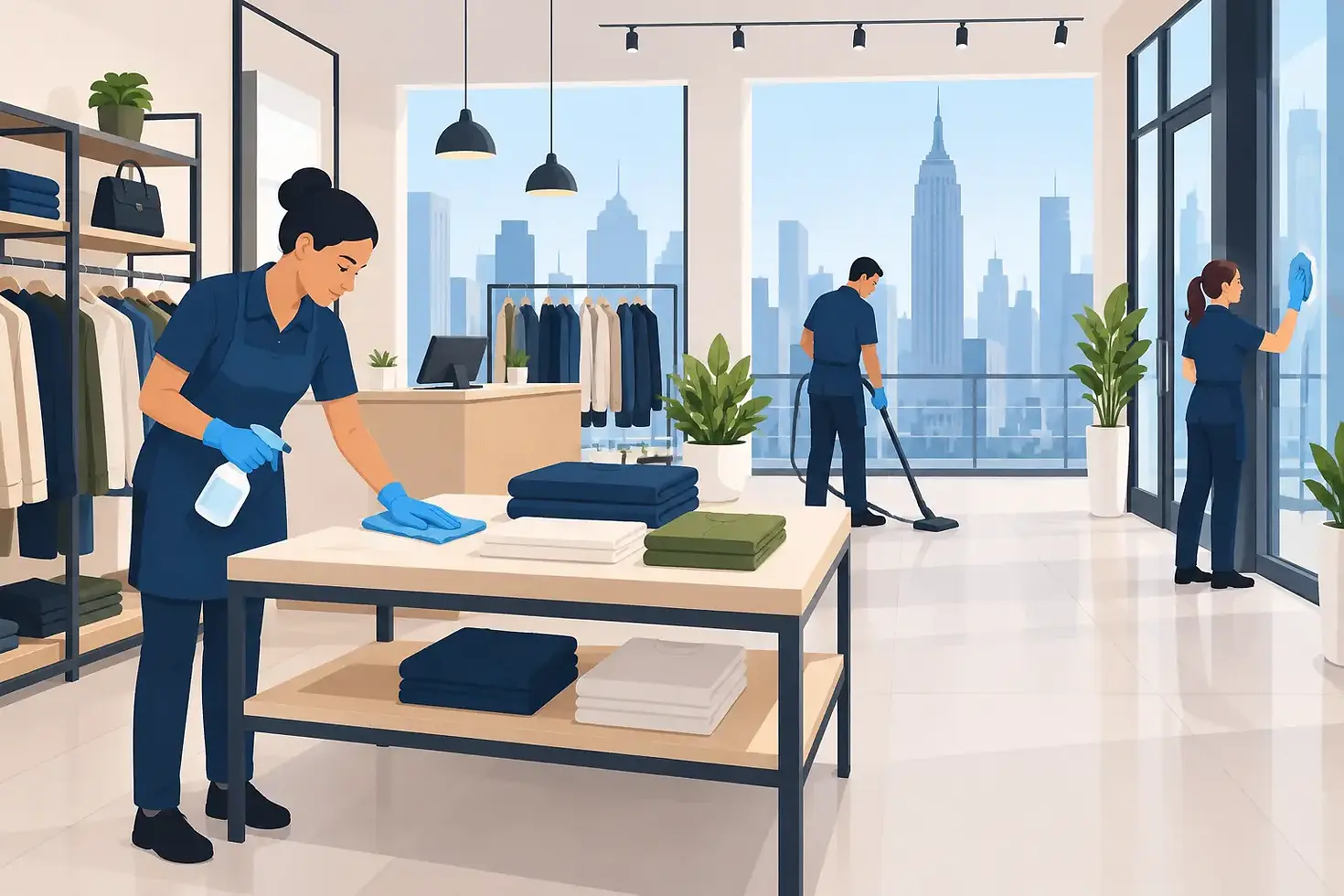
Retail Store Cleaning Guide for NYC Managers
A retail floor can look clean at 9:00 a.m. and feel neglected by lunch. Street moisture, packaging debris, fitting-room dust, fingerprints on glass, and constant foot traffic all build up quickly. This retail store cleaning guide is built for managers who need a consistent, presentation-ready standard without pulling employees away from customers and sales.
For stores across New York City, the challenge is rarely a lack of effort. It is usually a lack of a clear cleaning rhythm, the right floor-care methods, or enough coverage during the busiest parts of the day. Premium cleaning is not just about making a space look better after closing. It protects surfaces, supports health-conscious operations, and gives every customer a stronger first impression from the moment they step inside.
Start With the Customer Path
The most effective cleaning plan follows the customer journey rather than treating every area equally. A shopper notices the entry glass, floors, checkout counter, mirrors, and restrooms before they notice a dust-free storage shelf. These high-visibility areas deserve frequent attention throughout the day.
Begin at the exterior approach. Sidewalk-facing glass, door handles, entrance mats, and vestibules carry the visual weight of the store. Clean glass should be streak-free in daylight and under interior lighting. Mats should be vacuumed or extracted as needed, because they are the first line of defense against grit and moisture reaching the sales floor.
Inside, keep the entry zone dry and free of debris. During rain, snow, or heavy pedestrian traffic, this may require porter coverage instead of a single opening and closing clean. Wet-floor signage, mat rotation, and quick response to tracked-in water are practical safety measures, not optional details.
Build a Retail Store Cleaning Schedule That Matches Traffic
A store that receives steady traffic all day needs a different plan than one with a sharp afternoon rush. Cleaning frequency should reflect the number of shoppers, the type of merchandise, weather conditions, and whether food or beverage is present. A luxury boutique, a grocery-adjacent retailer, and a high-volume apparel store will not have the same cleaning priorities.
Opening Tasks
Opening cleaning sets the visual standard for the day. Before doors open, staff or a janitorial team should inspect floors for debris and marks, wipe entrance glass and touchpoints, empty waste receptacles, refresh restrooms, and clean checkout surfaces. Mirrors, display bases, and fitting rooms should be checked for smudges, dust, hangers, and discarded tags.
This is also the right time to correct issues that cannot be handled well during business hours, such as machine scrubbing a hard-floor section, spot treating carpet, or addressing stubborn adhesive residue. The goal is simple: customers should walk into a store that looks intentionally maintained, not hurriedly reset.
During Business Hours
Daytime cleaning should be discreet, responsive, and customer-aware. A porter can manage spills, restroom checks, waste removal, touchpoint disinfection, and visible floor debris without interrupting operations. In busy urban retail environments, this proactive coverage often makes the difference between a clean store and one that merely gets cleaned overnight.
Focus daytime attention on checkout counters, card terminals, door hardware, elevator buttons where applicable, fitting rooms, and restroom fixtures. Use products appropriate for the surface and follow required contact times for disinfectants. Spraying and immediately wiping a disinfectant may look efficient, but it can reduce its effectiveness.
Closing Tasks
Closing service is where a deeper reset happens. Floors should be vacuumed, swept, or machine scrubbed according to their material and condition. Waste should be removed, liners replaced, restrooms thoroughly cleaned, and break areas sanitized. Dusting should include ledges, fixtures, baseboards, display surfaces, and corners where debris becomes visible under bright retail lighting.
A strong closing routine also includes a quick inspection for maintenance concerns: loose flooring edges, damaged grout, scuffed walls, water stains, malfunctioning dispensers, or recurring odor issues. Cleaning teams often see these problems first. Reporting them early helps prevent a small defect from becoming a customer-facing issue.
Floor Care Is a Retail Presentation Issue
Floors cover more square footage than any other finish in a store, and they take the greatest abuse. A dull vinyl floor, stained carpet tile, or gritty entryway can make a well-merchandised space feel less premium. Routine mopping alone is rarely enough for high-traffic retail locations.
Hard floors need the correct approach for their finish. Neutral cleaning solutions and properly maintained equipment help preserve coatings, while machine scrubbing removes embedded soil that a mop leaves behind. When a floor begins to look gray, scratched, or unevenly reflective, it may need professional stripping and waxing rather than more frequent basic cleaning.
Carpeted retail areas benefit from regular vacuuming, prompt spot treatment, and scheduled extraction. Waiting until carpet looks visibly dirty is a costly approach because soil becomes embedded and wears down fibers over time. Extraction can revive appearance and remove the residues that contribute to odors and recurring spots.
Concrete and other specialty floors require their own maintenance plan. Using the wrong chemical or abrasive pad can permanently affect the finish. For stores with polished concrete, stone, luxury vinyl tile, or sealed surfaces, a knowledgeable commercial cleaning partner should match the process to the material instead of using a one-size-fits-all method.
Do Not Overlook Fitting Rooms, Restrooms, and Back-of-House Areas
Fitting rooms are small spaces with a large impact on customer confidence. They should be checked frequently for discarded merchandise, dust, hair, fingerprints, and odor. Mirrors and benches need consistent attention, while corners and under-bench areas should be included in the closing clean.
Restrooms require documented consistency. Clean fixtures, stocked soap and paper products, dry floors, and neutral odor control signal that the entire business is well managed. In a high-traffic store, a restroom should not be left until closing. Scheduled checks are the more dependable approach.
Back-of-house spaces matter for staff health, safety, and operational efficiency. Break rooms, receiving areas, stockrooms, and offices can accumulate cardboard dust, spills, and clutter quickly. These areas may not be customer-facing, but neglect can create pests, odors, trip hazards, and a lower standard for the entire team.
Use Clear Standards, Not Vague Instructions
“Keep the store clean” is not a workable instruction. A reliable program defines what clean looks like, who handles each task, how often it is completed, and what requires escalation. For example, “wipe glass” should specify which glass, what product is safe to use, and the acceptable result: no fingerprints, streaks, tape residue, or visible edges.
For larger retail operations, use inspection points at opening, midday, and closing. Managers should look at the same critical areas each time: entrance, floors, checkout, fitting rooms, restrooms, waste stations, and employee areas. Consistent inspections make it easier to identify patterns, such as a restroom that needs more daytime service or an entry floor that requires additional matting during wet weather.
Outsourcing specialty work can also be more efficient than asking store teams to solve difficult floor, carpet, or post-construction cleaning problems with limited equipment. Top Tier Solutions NY supports retail and commercial properties with customized janitorial coverage and precision floor care designed around real operating hours.
Choose Cleaning Methods That Protect Operations
A clean store should never come at the expense of customer safety or merchandise protection. Strong fragrance can be distracting in a fashion, beauty, or specialty retail setting. Excess water can damage flooring, create slip risks, and interfere with opening schedules. Harsh chemicals can dull fixtures, etch stone, or leave residue on display surfaces.
The best approach balances appearance, hygiene, speed, and material protection. It may mean scheduling carpet extraction after hours, using low-moisture methods in sensitive areas, or assigning a daytime porter during peak periods instead of relying only on an overnight crew. The right plan depends on the store’s traffic patterns and finishes, but the standard should remain consistent.
A retail space earns trust in small moments: a spotless mirror, a dry entrance on a rainy day, a checkout counter free of smudges, and floors that still look cared for at closing. Treat those details as part of the customer experience, and your cleaning program will support the brand long after the first impression.


Comments