
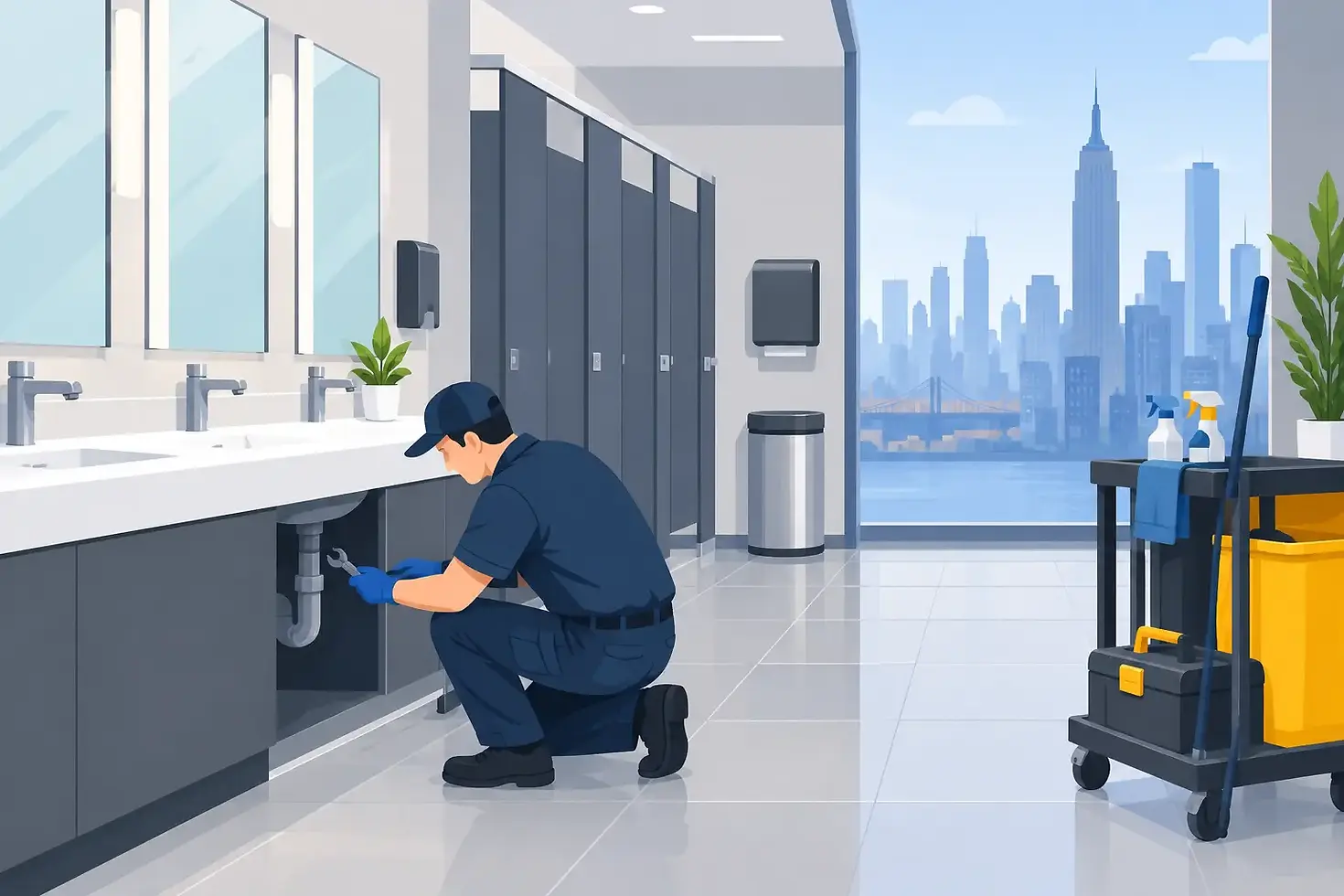
Commercial Restroom Maintenance Guide for NYC
A restroom can shape a visitor’s opinion of an entire property in less than a minute. For office tenants, guests, employees, and prospective clients, a clean, stocked, odor-free space signals that building operations are under control. This commercial restroom maintenance guide helps facility managers establish a dependable standard for high-traffic properties where a quick visual check is never enough.
In a busy New York commercial environment, restroom conditions can change rapidly between scheduled cleanings. Foot traffic, limited ventilation, aging fixtures, hard-water buildup, and supply shortages all create visible problems. The answer is not simply cleaning more often. It is creating a precise maintenance program that combines routine service, responsive touch-ups, periodic deep cleaning, and clear accountability.
Set the Standard Before Building the Schedule
Restroom maintenance should begin with a defined presentation standard. “Clean” is too subjective to manage across shifts, vendors, or multiple locations. A better standard describes what users should see, smell, and experience: dry floors, empty waste receptacles, streak-free mirrors, stocked dispensers, sanitary fixtures, and a neutral, fresh-smelling room.
The standard should also address details that are easy to miss during a rushed service. Door handles, partition latches, flush handles, light switches, baby changing stations where applicable, and the exterior of dispensers all collect frequent touch contamination. Baseboards, corners, vents, and the area behind toilets affect the overall impression even when they are not immediately visible.
For property managers, the right service frequency depends on use rather than square footage alone. A small lobby restroom serving hundreds of visitors may need more attention than a larger employee-only restroom. Track busy periods for at least two weeks, then use that traffic pattern to plan service around actual demand.
Commercial Restroom Maintenance Guide: Daily Priorities
Daily restroom care has two distinct goals: preserve sanitation and keep the space ready for the next user. Those goals overlap, but they are not identical. A restroom can be disinfected yet still look neglected if the mirror is spotted, the trash is full, or a paper-towel dispenser is empty.
At each scheduled service, attendants should remove trash, replenish paper products and soap, clean and disinfect toilets, urinals, sinks, counters, and high-touch points, then inspect the floor for moisture, debris, and stains. Mirrors should be cleaned with a streak-free finish, and partitions should be checked for smudges, graffiti, and damage. The final walkthrough matters because it catches the small presentation issues that task-based cleaning can overlook.
High-traffic facilities often need porter coverage or daytime attendant visits in addition to after-hours janitorial service. This is especially true for medical offices, retail spaces, schools, restaurants, event venues, shared workspaces, and multi-tenant buildings. A porter can address spills, restock supplies, and document fixture issues before a minor problem becomes a tenant complaint.
Focus on floors and moisture control
Restroom floors deserve special attention because they affect both safety and appearance. Water around sinks, toilets, and entryways creates slip risk, while neglected grout lines and corners hold soil and odors. Use the correct cleaner for the floor material, whether tile, vinyl composition tile, sealed concrete, or natural stone. Harsh chemicals may remove soil quickly but can dull finishes, weaken grout, or create residue that attracts more dirt.
Routine damp mopping is appropriate for many spaces, but it will not correct embedded grime, soap film, or discoloration along edges. Periodic machine scrubbing is often the better solution for heavily used restrooms. It lifts ground-in soil more evenly and helps restore a consistent finish without relying on excessive chemical use.
Control odors at the source
Fragrance should never be the primary odor-control strategy. A strong scent can make users wonder what it is covering up. Persistent restroom odors usually point to one of several sources: dirty floor drains, urinal splash, buildup beneath fixture rims, overflowing waste, wet mop heads, poor ventilation, or moisture trapped in grout and caulking.
Address the source first. Clean drain areas according to the facility’s maintenance protocol, use appropriate restroom cleaners on fixtures and surrounding surfaces, and ensure trash is removed before it becomes a moisture or odor issue. If odors remain after thorough cleaning, report the issue for plumbing or ventilation review. Cleaning teams should not be expected to solve a mechanical problem with air freshener.
Build a Practical Service Frequency Plan
A clear frequency plan prevents two costly extremes: overservicing low-use areas while under-maintaining the restrooms that need attention most. The schedule should be flexible enough to respond to weather, events, tenant moves, construction activity, and seasonal illness.
For many office settings, daily detailed cleaning plus one or more daytime checks is a strong baseline. Properties with sustained public traffic may require checks every one to two hours during peak periods. Instead of treating these visits as abbreviated cleanings, assign a focused inspection sequence: supplies, waste, fixtures, floors, odor, and reported damage.
Weekly work should go beyond the visible surfaces. This may include polishing fixtures, cleaning dispenser exteriors and undersides, wiping partitions from top to bottom, treating grout trouble spots, dusting vents, and cleaning wall areas near sinks and hand dryers. Monthly or quarterly deep cleaning can address scale buildup, high wall dust, vents, drains, machine scrubbing, and restoration needs that routine service cannot resolve.
The exact intervals depend on your restroom design and occupancy. Touchless fixtures can reduce contact points, for example, but they still need inspection for sensor issues, battery failure, and soap residue. Older restrooms may need more detailed work around fixtures and grout, while newly renovated spaces may require product-specific care to protect finishes and warranties.
Use Products and Tools With Intent
Using one all-purpose product throughout a restroom can create inconsistent results. Disinfectants must be used according to their label directions, including required dwell time. If a product is wiped away too quickly, it may clean the surface without delivering the intended disinfection result.
Color-coded microfiber cloths and mop systems help prevent cross-contamination between toilets, sinks, counters, and general surfaces. Teams should use clean tools for each area and replace soiled mop water rather than spreading it across the room. These procedures are basic, but precision here separates a surface-level service from professional facility maintenance.
Dispensers and consumables also deserve a deliberate plan. Choose paper, soap, tissue, liners, and feminine hygiene supplies based on actual usage and the reliability of replenishment. The lowest-cost supply can create higher operating costs if it jams dispensers, runs out too quickly, or leaves users dissatisfied. Keep a modest on-site backup inventory so a delivery delay does not become a service failure.
Make Inspection and Documentation Part of the Work
Restroom maintenance improves when teams can identify patterns rather than reacting to isolated complaints. A simple digital or written log can record service time, supply levels, unusual odor concerns, leaks, clogged fixtures, damaged dispensers, and safety hazards. This gives facility managers useful evidence when adjusting cleaning frequency or requesting building repairs.
Inspection also protects the cleaning team. A leaking toilet, loose grab bar, cracked tile, broken lock, or malfunctioning sensor is not merely a cleaning issue. It can affect safety, accessibility, water use, and tenant confidence. Staff should know which concerns require immediate escalation and who is responsible for receiving the report.
Quality control should include periodic unannounced inspections by a supervisor or facility representative. Check the room from the user’s viewpoint: enter, look at the floor, test soap and paper dispensers, inspect the mirror and sink, and notice the smell. Then look closer at the edges, hinges, partition hardware, and areas behind fixtures. That two-level review catches both visible failures and long-term buildup.
Know When Routine Cleaning Is Not Enough
There is a point when daily maintenance can no longer compensate for worn finishes, stained grout, etched fixtures, damaged caulking, or chronic floor discoloration. When that happens, schedule corrective work rather than asking the routine crew to work around the problem indefinitely.
Deep cleaning is appropriate after construction work, a major event, illness outbreaks, extended neglect, or tenant turnover. Specialty floor care may be needed when tile and grout have lost their appearance or resilient floors show embedded soil and finish wear. The right corrective service improves appearance, but it also makes future daily maintenance more efficient.
For demanding properties across Queens, Manhattan, Brooklyn, the Bronx, and Long Island, Top Tier Solutions NY builds customized janitorial and porter plans around real traffic patterns, facility requirements, and presentation standards. The goal is not a restroom that looks acceptable immediately after service. It is a consistently clean, well-stocked space that remains ready throughout the business day.
A restroom program works best when it is treated as an operating system, not a checklist. Set the standard, inspect it often, respond quickly, and invest in deeper corrective care before small defects become part of the property’s reputation.



Comments