
Construction Final Cleaning Guide for NYC Projects
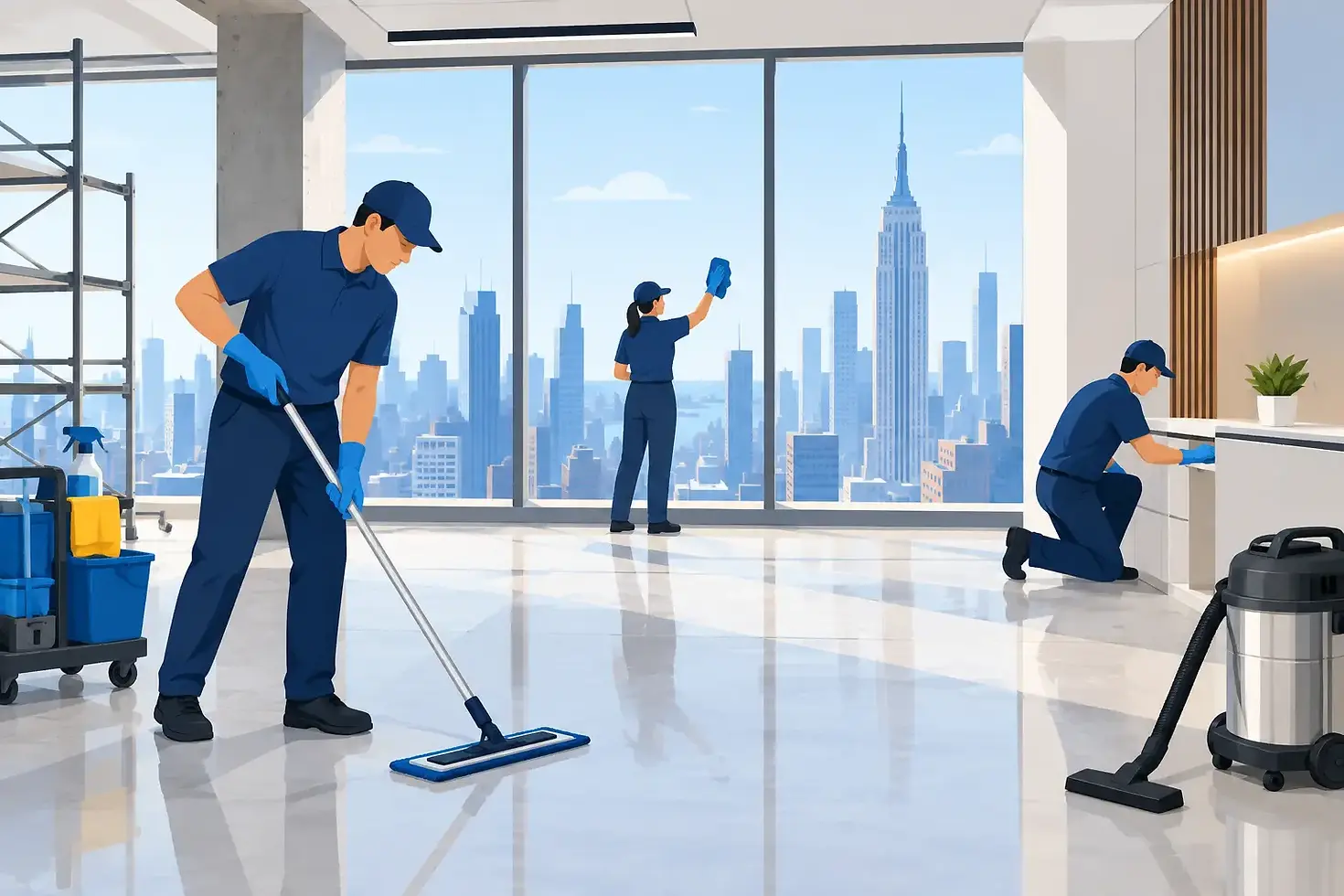
A newly completed commercial space can look finished from across the room while still failing the moment someone touches the glass, opens a cabinet, or walks across the floor. Fine drywall dust, adhesive residue, paint specks, and construction debris have a way of settling where tenants, inspectors, and visitors will notice them first. This construction final cleaning guide outlines the disciplined process that turns an active jobsite into a presentation-ready business environment.
For property managers, general contractors, and facility teams, final cleaning is not simply a last sweep before keys change hands. It is the final quality-control stage between construction completion and occupancy. Done well, it protects new finishes, supports a smoother turnover, and gives the completed space the polished first impression the project deserves.
Start Final Cleaning Only When the Site Is Ready
The fastest way to create rework is to begin detailed cleaning while trades are still cutting materials, sanding walls, or completing overhead work. Dust travels, and a crew that cleans glass and floors too early may be cleaning them again the next morning.
Before scheduling final cleaning, confirm that major construction work is complete, utilities are operating, permanent fixtures are installed, and all large debris has been removed. HVAC should be running when possible, because air movement can reveal whether dust continues to circulate through the space. If ceiling work or punch-list repairs remain, identify those areas in advance and plan for a targeted return visit rather than treating the entire space as complete.
A practical handoff walkthrough with the general contractor or site representative helps define expectations. Review access hours, loading procedures, elevator use, waste-removal rules, water availability, and any surfaces requiring special care. In a dense commercial building, these logistics can affect the schedule as much as the square footage does.
The Three Phases of Post-Construction Cleaning
Post-construction cleaning is most effective when handled in phases. The exact scope depends on the project, but separating the work prevents fine dust and late-stage construction activity from undermining the final result.
Rough Cleaning Removes the Jobsite Remains
Rough cleaning takes place after major construction debris can be safely removed. The focus is on collecting loose materials, vacuuming heavy dust, clearing packaging, and preparing the site for finishing work. It is not a substitute for a final clean, but it gives contractors and installers a safer, more organized space to complete remaining tasks.
This stage may include removing stickers and protective film where approved, sweeping or vacuuming floors, and clearing debris from cabinets, closets, mechanical rooms, and common areas. Disposal needs should be agreed upon early. A cleaning team can manage normal cleaning waste, but construction debris, pallets, and regulated materials often require separate contractor arrangements.
Detailed Cleaning Addresses Every Finished Surface
The detailed phase is where meticulous attention to detail becomes visible. Cleaners work from high to low, beginning with ceiling vents, ledges, light fixtures, and upper millwork before moving to walls, doors, counters, and floors. This sequence matters because gravity does not negotiate. Cleaning a finished floor before overhead dust is removed creates unnecessary labor and increases the risk of tracking debris.
A complete detailed clean generally covers dust removal from horizontal and vertical surfaces, interior glass cleaning, wipe-down of cabinetry and fixtures, cleaning of restrooms and break areas, and vacuuming of corners, seams, vents, and baseboards. Labels, tape, caulk smears, and adhesive residue require careful removal with methods appropriate for the surface.
New materials are not automatically durable materials. Stone, luxury vinyl tile, sealed concrete, stainless steel, powder-coated metal, wood finishes, and specialty glass can all be damaged by the wrong chemical, abrasive pad, or scraping technique. Product selection should be based on manufacturer guidance and field testing in a discreet area when there is any uncertainty.
Final Touch-Up Prepares the Space for Turnover
The final touch-up happens after the last repairs, inspections, and contractor traffic. Its purpose is simple: remove the evidence that work was completed. A quality team revisits glass, entry doors, floors, restrooms, countertops, fixtures, and high-touch points, then corrects any dust settlement, fingerprints, footprints, or fresh debris.
This is often the most important visit for a tenant-facing office, retail location, medical facility, school, or managed property. The space should feel clean immediately, not merely look clean under favorable lighting.
A Construction Final Cleaning Guide for High-Visibility Areas
Not every area carries the same visual weight. A mechanical closet needs a clean, safe finish, but a lobby floor or conference-room glass wall can shape the entire perception of the project. Prioritize the spaces occupants and visitors encounter first.
Glass, Doors, and Entry Points
Glass demands patience. Construction dust can leave haze, while tape and labels may leave adhesive behind. Clean both sides of interior glass, inspect edges and corners, and check the surface from multiple angles. Door frames, handles, thresholds, and push plates should receive the same level of attention, especially in high-traffic entries.
Avoid aggressive scraping unless the glass manufacturer permits it and the surface has been inspected. Tempered and coated glass may be vulnerable to scratching, and replacement after turnover is an expensive avoidable problem.
Restrooms and Break Areas
Restrooms are an immediate test of whether a space is ready for use. Clean and disinfect toilets, urinals, sinks, partitions, dispensers, mirrors, fixtures, and touchpoints. Remove labels from fixtures, polish chrome where appropriate, and inspect drains and corners for leftover grout, dust, or packaging.
In break rooms, detail the exterior and interior of cabinets, countertops, sinks, appliances, backsplashes, and millwork. Even new cabinets collect sawdust and installation debris. A clean interior matters as much as a polished countertop when the space is about to be stocked and occupied.
Floors Need a Surface-Specific Plan
Floor care is where a final cleaning can either elevate a project or create lasting damage. Vacuumed carpet may still hold fine construction dust that requires extraction or low-moisture cleaning, depending on the material and manufacturer recommendations. Hard floors often need machine scrubbing, while new resilient flooring may require an approved initial clean before protective finish is applied.
Concrete requires its own judgment. Polished concrete, sealed concrete, and unfinished concrete have different cleaning needs, and acidic or overly aggressive products can compromise appearance. The same is true for natural stone and terrazzo. When floors are a prominent design feature, floor-care expertise should be part of the cleaning plan from the beginning, not an afterthought scheduled the night before turnover.
Build Quality Control Into the Final Walkthrough
A final clean should be inspected under the same conditions the client will experience. Turn on the lights. Open blinds or shades. Look across floors at a low angle. Stand near glass partitions and examine reflections. Open cabinets and drawers. These small checks reveal dust, streaks, missed stickers, and residue that can disappear during a quick walk through.
A reliable final walkthrough usually checks for the following:
Dust-free vents, ledges, baseboards, frames, and millwork
Smudge-free glass, mirrors, doors, and stainless steel
Clean, odor-free restrooms with polished fixtures and empty waste bins
Debris-free corners, closets, cabinets, and utility areas
Floors free of dust, adhesive residue, footprints, and cleaning streaks
Clear access routes, entrances, and common areas ready for occupancy
Documenting unresolved issues is just as valuable as identifying cleaned areas. Cleaning teams should distinguish between dirt or residue that can be corrected and construction defects, such as chipped tile, scratched glass, damaged flooring, or incomplete caulking. That clarity keeps punch-list responsibilities where they belong.
Plan Around Building Operations, Not Just the Deadline
For commercial projects in Queens, Manhattan, Brooklyn, the Bronx, and Long Island, access restrictions can be as demanding as the cleaning itself. Freight elevator reservations, loading dock windows, security procedures, union requirements, and after-hours work may shape the scope and crew size. A cleaning partner that plans around building operations helps prevent a final clean from becoming the reason turnover is delayed.
It also helps to leave time between the main final clean and the occupancy date. If possible, schedule a touch-up after the final contractor walkthrough and before furniture, inventory, or technology equipment arrives. Once a space is filled, cleaning behind and beneath installed items becomes more difficult and expensive.
The right final clean does more than remove dust. It gives everyone walking into the finished space confidence that the details were handled with care. For projects where presentation, floor condition, and dependable scheduling matter, a white-glove approach gives the completed work the finish it earned.



Comments