
How to Reduce Restroom Odors in Commercial Spaces
A restroom can look clean at first glance and still leave a poor impression within seconds. In a busy office, retail location, medical facility, school, or multifamily common area, odor is often the detail occupants remember most. Learning how to reduce restroom odors means looking beyond a quick wipe-down and addressing the moisture, residue, airflow, and maintenance gaps that allow odors to return.
For commercial facilities, the goal is not to mask a problem with fragrance. It is to keep the restroom consistently sanitary, dry, and presentation-ready throughout the day. That requires a precise routine, the right products, and enough attention to high-touch, high-moisture areas.
Start With the Real Source of the Odor
Most persistent restroom odors are not caused by a single obvious issue. They develop when small amounts of urine, organic soil, soap residue, standing water, or bacteria remain in overlooked areas. A deodorizer may make the room smell better for an hour, but it will not solve odor coming from a drain, grout line, toilet base, or saturated mop head.
The first step is to inspect the full restroom, not just the fixtures. Check under and behind toilets, around urinals, along wall edges, inside waste receptacles, around floor drains, and beneath partitions. In high-traffic spaces, splash zones near urinals and toilets often need more frequent attention than the rest of the floor.
Odor that appears immediately after cleaning can point to a product or process issue. Odor that returns later in the day may signal inadequate service frequency, ventilation limitations, or heavy traffic that requires porter support between scheduled cleanings.
Clean Fixtures and Floors as One System
Toilets, urinals, floors, and nearby walls work together as an odor system. Cleaning only the bowl or urinal leaves the surrounding contamination in place. A meticulous restroom program treats the entire area around each fixture, including flush handles, exterior surfaces, seats, hinges, partition walls, bases, and the floor underneath.
Urinals deserve particular attention because mineral buildup and uric scale can trap odor-causing bacteria. Regular surface cleaning is necessary, but periodic deep cleaning may be needed to remove buildup below the visible surface. The same principle applies to toilet bases and grout lines, where residue can settle over time.
Floor care is equally important. Grout, textured tile, damaged caulking, and unsealed concrete can retain moisture and soil long after a routine mop pass. Machine scrubbing, extraction, or targeted deep cleaning may be the right solution when restroom flooring continues to smell despite daily service. The proper method depends on the floor material and condition. Aggressive chemicals or excessive water can damage some finishes, so the cleaning plan should match the surface.
Use the Right Chemistry, Not More Fragrance
Disinfectants are valuable for reducing germs on appropriate surfaces, but they are not automatically the best answer for every odor issue. A disinfectant must be used according to its label, including required dwell time, to perform as intended. If it is wiped away too quickly, the result may look clean without delivering the expected sanitation benefit.
For urine-related odors, an enzyme-based or odor-neutralizing product may be useful as part of the process. These products are designed to break down or neutralize organic residues rather than cover them with perfume. They work best after gross soil has been removed and when they can reach the affected area.
Avoid mixing cleaning chemicals. Combining products can reduce effectiveness, create strong fumes, or create unsafe conditions. A professional cleaning team should use clearly labeled products, follow manufacturer instructions, and keep the chemistry consistent from shift to shift.
Fragrance has a role, but it should be subtle. An overpowering scent can make occupants question whether a restroom is actually clean. A neutral, fresh-smelling environment communicates a higher standard than a heavily perfumed one.
Control Moisture Before It Becomes an Odor Problem
Moisture is one of the most common reasons odors linger. Wet floors, leaking fixtures, overflowing trash, damp towels, and slow drains all create conditions where bacteria and mildew can thrive. In a commercial restroom, moisture control is as much an operational task as a cleaning task.
Inspect toilets, urinals, faucets, supply lines, and hand dryers for leaks or overspray. A small leak around a toilet base can go unnoticed until it produces a persistent odor and damages surrounding materials. Slow drains should also be addressed promptly. When water and organic debris sit in a drain, odor can travel back into the room.
Floor drains need scheduled maintenance, especially in larger facilities or restrooms with frequent washdowns. A dry drain trap can allow sewer gas into the space. In other cases, debris in the drain may be the source. The right remedy depends on the plumbing configuration, so recurring drain odor should be escalated to building maintenance or a qualified plumbing professional rather than repeatedly covered with air freshener.
Cleaning tools matter here as well. A mop that is not properly laundered or replaced can spread odor across the floor instead of removing it. Fresh solution, clean microfiber, and well-maintained equipment help protect the quality of every service visit.
Improve Airflow and Remove Odor at the Source
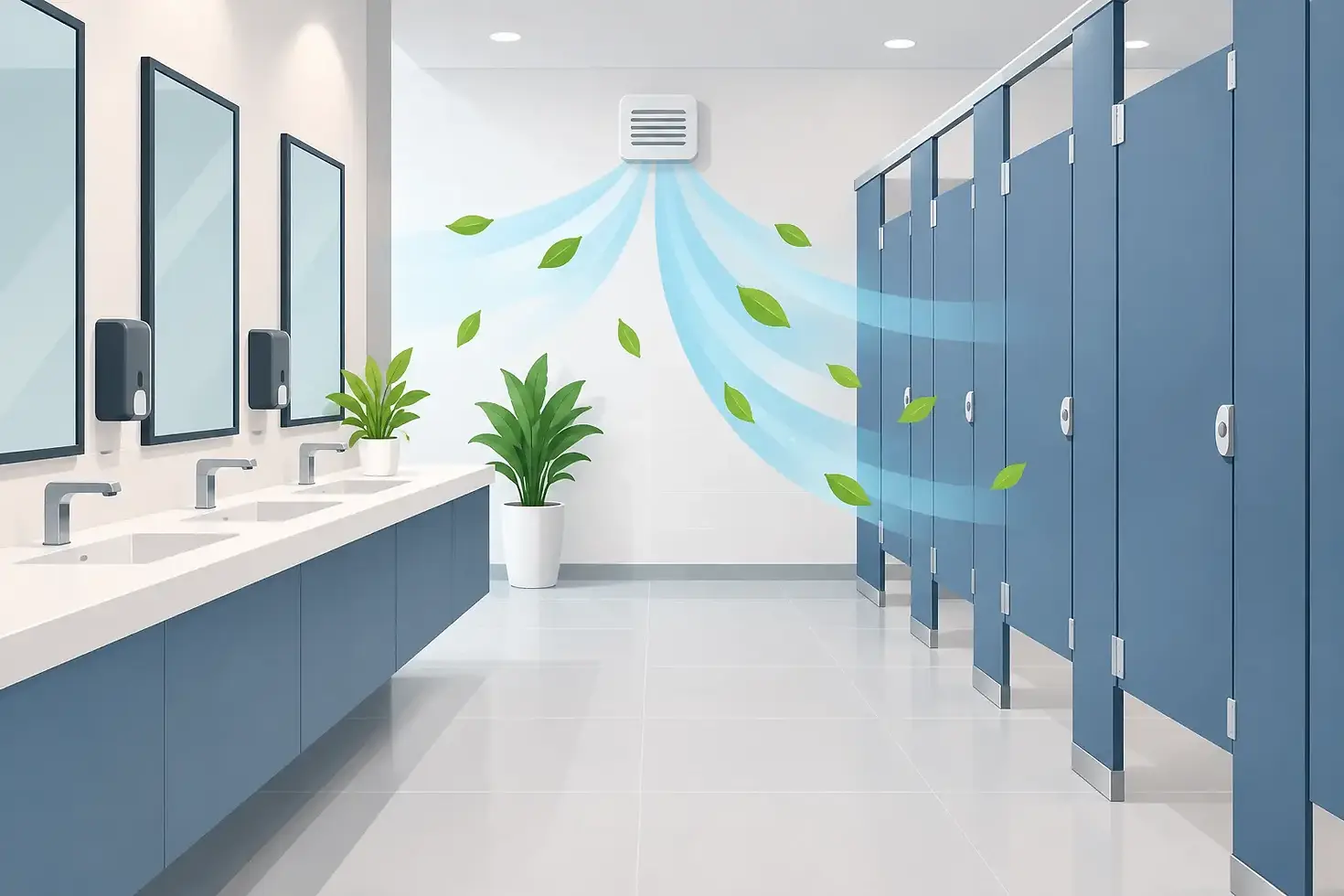
A clean restroom can still feel unpleasant if the ventilation is weak. Exhaust fans should operate consistently, vents should be clear of dust buildup, and airflow should be evaluated when odor is concentrated near ceilings, drains, or enclosed stalls.
In older commercial properties across New York City, ventilation challenges are not unusual. A restroom without adequate exhaust may need more frequent cleaning and waste removal because odors remain in the room longer. Facility teams should document recurring concerns and determine whether the issue is tied to fan operation, blocked vents, plumbing, or traffic patterns.
Air fresheners and dispensers can support a well-maintained restroom, but they should be the final layer, not the primary strategy. The best odor control is still prompt removal of the material causing the odor.
Build a Service Schedule Around Actual Traffic
A once-daily cleaning schedule may be enough for a lightly used private office restroom. It may be insufficient for a lobby restroom, retail facility, medical office, school, or high-occupancy workplace. Service frequency should reflect foot traffic, operating hours, fixture count, and the expectations of guests and tenants.
For heavily used restrooms, daytime porter service can make a visible difference. A porter can restock consumables, empty waste, spot-clean splash zones, inspect fixtures, dry floors, and respond before small issues become complaints. This is especially valuable during peak periods, events, shift changes, or building tours.
A practical restroom checklist should include more than toilet paper and hand soap. Staff should verify that fixtures are clean and functioning, waste containers are emptied, floors are dry, drains are clear, dispensers are operational, and the room has a neutral odor. Documenting recurring issues also helps identify whether a problem is related to cleaning, plumbing, ventilation, or a damaged surface.
Know When Routine Cleaning Is Not Enough
If odors persist after thorough daily cleaning, the restroom may need a deeper intervention. Common signs include odor returning within hours, darkened grout near fixtures, recurring drain smell, staining around toilet bases, warped flooring, or buildup inside urinals that does not respond to standard service.
At that point, a detailed assessment can prevent wasted effort. Deep cleaning may involve machine scrubbing floors, treating grout and tile, removing mineral deposits, cleaning difficult-to-reach fixture areas, or coordinating with maintenance on leaks and drains. For property managers and facility leaders, this approach is more cost-effective than repeatedly adding air fresheners while the underlying issue worsens.
Top Tier Solutions NY approaches commercial restroom care with the same white-glove attention used across high-traffic facilities: address the visible details, identify the hidden causes, and maintain the space before odor becomes a tenant or customer concern.
A restroom should never announce that it needs attention. With consistent cleaning, controlled moisture, responsive maintenance, and a schedule built around real traffic, it can remain quietly clean, fresh, and ready for the people who rely on it.



Comments