
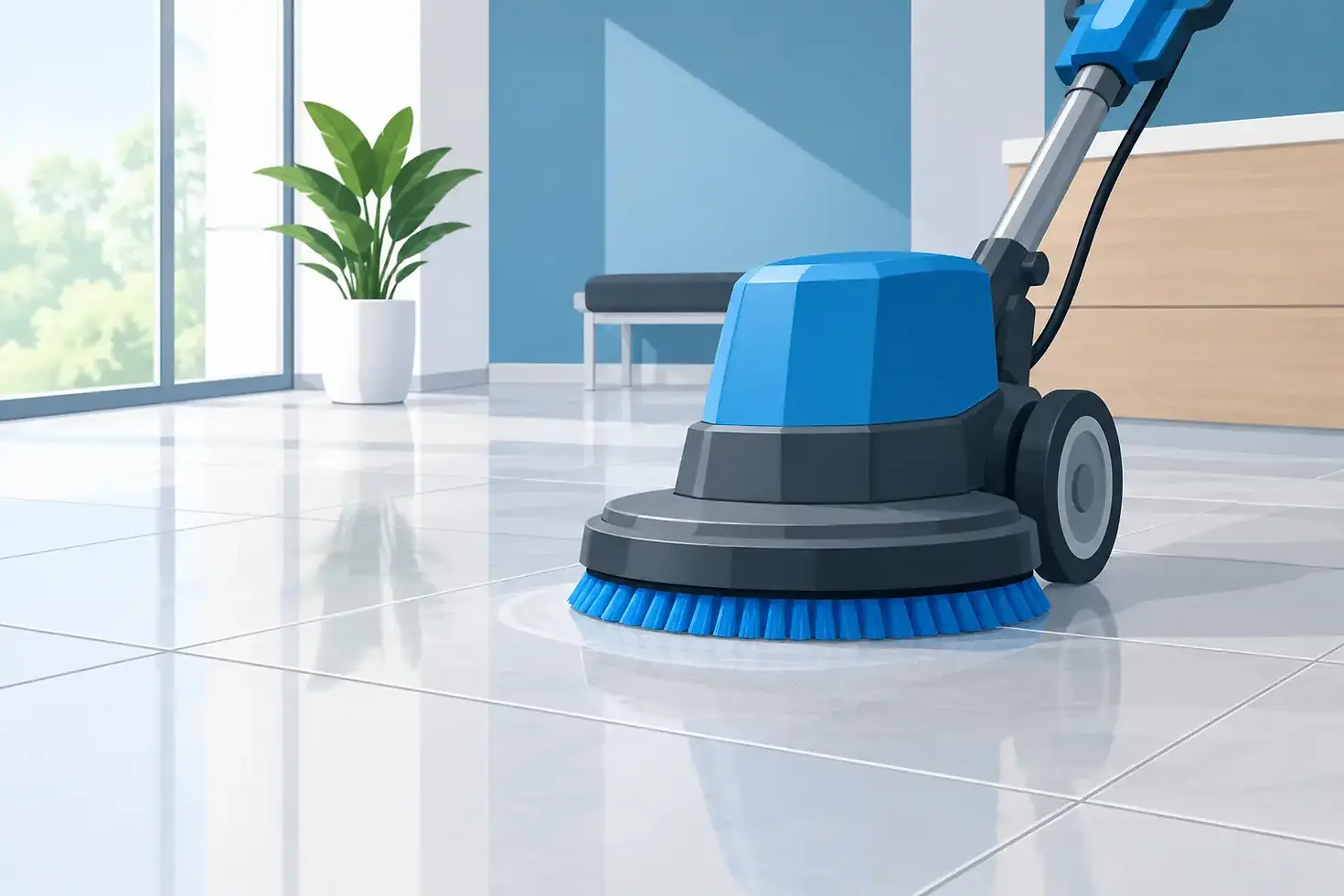
Machine Scrubbing for Tile Floors That Last
A tile floor can look clean from a distance while carrying a dull film of tracked-in grit, spill residue, and soil packed into the grout lines. For busy offices, retail spaces, lobbies, healthcare-adjacent facilities, and common areas, machine scrubbing for tile floors is the difference between a surface that is merely maintained and one that looks consistently cared for.
Daily mopping has a role, but it cannot reliably remove the buildup created by foot traffic, wet weather, food and beverage spills, rolling carts, and cleaning product residue. A professional machine-scrubbing program delivers the controlled agitation, solution management, and recovery needed to restore the tile's appearance without creating unnecessary disruption to operations.
Why Tile Floors Lose Their Clean Appearance
Tile is often selected for commercial settings because it is durable, practical, and easy to sanitize. That does not mean it is maintenance-free. In high-traffic environments, fine abrasive particles settle into textured tile, corners, edges, and grout lines. Over time, the floor may start to look gray, uneven, or permanently stained even when routine cleaning is being performed.
The issue is often a combination of soil and residue. Mop water that is not changed frequently enough can redeposit dirt. Too much cleaner can leave a sticky film that attracts more soil. A weak cleaning process may brighten open areas while leaving grime behind along baseboards, under furniture, and in the grout.
This is especially visible in entryways, elevators, corridors, restrooms, breakrooms, retail aisles, and building lobbies. These surfaces shape the first impression of a property. They also affect how tenants, visitors, employees, and clients perceive the overall standard of the facility.
What Machine Scrubbing for Tile Floors Does Differently
Professional machine scrubbing combines the right cleaning chemistry with mechanical agitation and soil recovery. A trained cleaning team selects a neutral or appropriately alkaline solution based on the type of tile, the condition of the grout, and the kind of buildup present. The solution is allowed to work for the proper dwell time, then a floor machine or autoscrubber agitates the surface with the correct pad or brush.
That agitation matters. It reaches into the texture of the tile and loosens embedded grime that a microfiber mop cannot fully lift. On larger open floor areas, an autoscrubber can apply solution, scrub evenly, and recover dirty water in the same pass. The result is a more consistent clean with less chance of leaving behind contaminated moisture.
Detail work completes the process. Edges, corners, tight transitions, and areas around fixtures often require hand attention because machines cannot reach every location. This combination of equipment and meticulous detail cleaning produces the polished, even result commercial facilities expect.
It improves appearance without treating every issue the same way
Not every tile floor needs the same level of service. A well-maintained porcelain lobby may benefit from scheduled low-moisture scrubbing, while a heavily used restroom may require more focused grout cleaning and targeted degreasing. Kitchen-adjacent areas may need a different cleaning approach than a standard office corridor.
The best plan is based on traffic, soil type, floor finish, slip concerns, operating hours, and the property's appearance standards. A premium service provider assesses those conditions before selecting pads, brushes, chemicals, and cleaning frequency. Using an overly aggressive pad or the wrong product can damage the finish, haze the tile, or weaken grout over time.
When Your Facility Should Schedule a Deep Scrub
A deep scrub is not only for floors that look visibly dirty. Waiting until tile appears severely neglected can make restoration more labor-intensive and may shorten the useful life of the floor system. Proactive service keeps soil from becoming a long-term problem.
Common signs that a machine scrub is due include dull traffic paths, darkened grout, a sticky feel underfoot, visible residue after mopping, uneven color between open areas and edges, or a floor that still looks worn shortly after routine cleaning. Recurring odor near restrooms or breakrooms can also signal trapped residue in grout and floor edges.
For many commercial spaces, machine scrubbing works best as part of a planned floor-care schedule rather than as a one-time reaction. High-traffic lobbies and entrances may need attention more frequently than conference rooms or low-use back-of-house spaces. In New York City properties, seasonal weather can also change the schedule. Rain, snow, de-icing materials, and street grit can accelerate soil buildup during wetter months.
The Right Equipment Protects the Floor and the Building
A machine is only as effective as the person operating it. Floor care requires judgment about water volume, solution concentration, pad selection, dwell time, and recovery. Leaving excess water on tile can create a slip risk, seep into vulnerable transitions, and interrupt normal use of the space.
Professional crews also plan the work around the building. They use appropriate wet-floor signage, control access to active areas, protect nearby surfaces, and sequence the service to minimize disruption. For offices, retail locations, medical offices, and managed commercial buildings, after-hours or low-traffic scheduling can keep the floor-care process out of the way of employees and visitors.
Equipment choice depends on the layout. A compact scrubber may be ideal for narrow corridors and restroom approaches, while larger walk-behind equipment can efficiently service broad lobby areas. Hand tools remain essential for grout lines, perimeter edges, and obstacles. Precision is what prevents the clean from looking incomplete.
Machine Scrubbing Is Not the Same as Stripping or Waxing
Tile floor care is often discussed alongside stripping and waxing, but the services serve different purposes. Machine scrubbing removes soil, residue, and surface buildup from tile and grout. It is a cleaning and maintenance process designed to refresh the floor without unnecessarily altering its finish.
Stripping and waxing generally apply to resilient flooring with a finish system, such as VCT. Those floors may require old finish to be removed and new protective coats applied. Applying a wax-style approach to the wrong tile surface can create appearance problems and maintenance complications.
Some tile floors may benefit from sealing, grout restoration, or specialty stain treatment, particularly when grout is porous or deeply discolored. Those services should follow a condition assessment, not an assumption. The right recommendation protects the asset and avoids paying for work the floor does not need.
How to Keep Results Looking Better Between Services
Machine scrubbing delivers a major reset, but the day-to-day program determines how long that result lasts. Entry mats should be clean, properly sized, and positioned to capture grit before it reaches the tile. Janitorial teams should use clean tools, fresh water, and correctly diluted products rather than relying on more chemical as a shortcut.
Spills should be addressed promptly, especially in breakrooms and entrances. Periodic detail cleaning at baseboards, door thresholds, and corners prevents those areas from becoming dark outlines around an otherwise clean floor. It also helps to track recurring trouble spots, such as a vending area, a heavily used doorway, or a restroom entrance, and adjust service frequency accordingly.
For property managers and facility teams, a documented floor-care plan creates accountability. It clarifies which areas receive routine cleaning, which receive scheduled machine scrubbing, and when a deeper restoration evaluation is needed. That level of planning supports better budgeting and a more presentation-ready building throughout the year.
A Cleaner Floor Supports a Better-Run Facility
Tile care is a visible operational detail with an outsized effect. Clean, evenly maintained floors make a lobby feel managed, help protect against abrasive wear, and support a safer environment by removing residue that can contribute to slippery conditions. Just as important, they give staff and visitors confidence that the facility is cared for beyond what they can immediately see.
Top Tier Solutions NY approaches commercial floor care with elite standards, responsive scheduling, and meticulous attention to the details that machines alone cannot handle. When machine scrubbing is matched to the tile, traffic level, and operating needs of the property, it becomes a practical way to preserve appearance, protect the floor, and keep the space ready for business.



Comments