
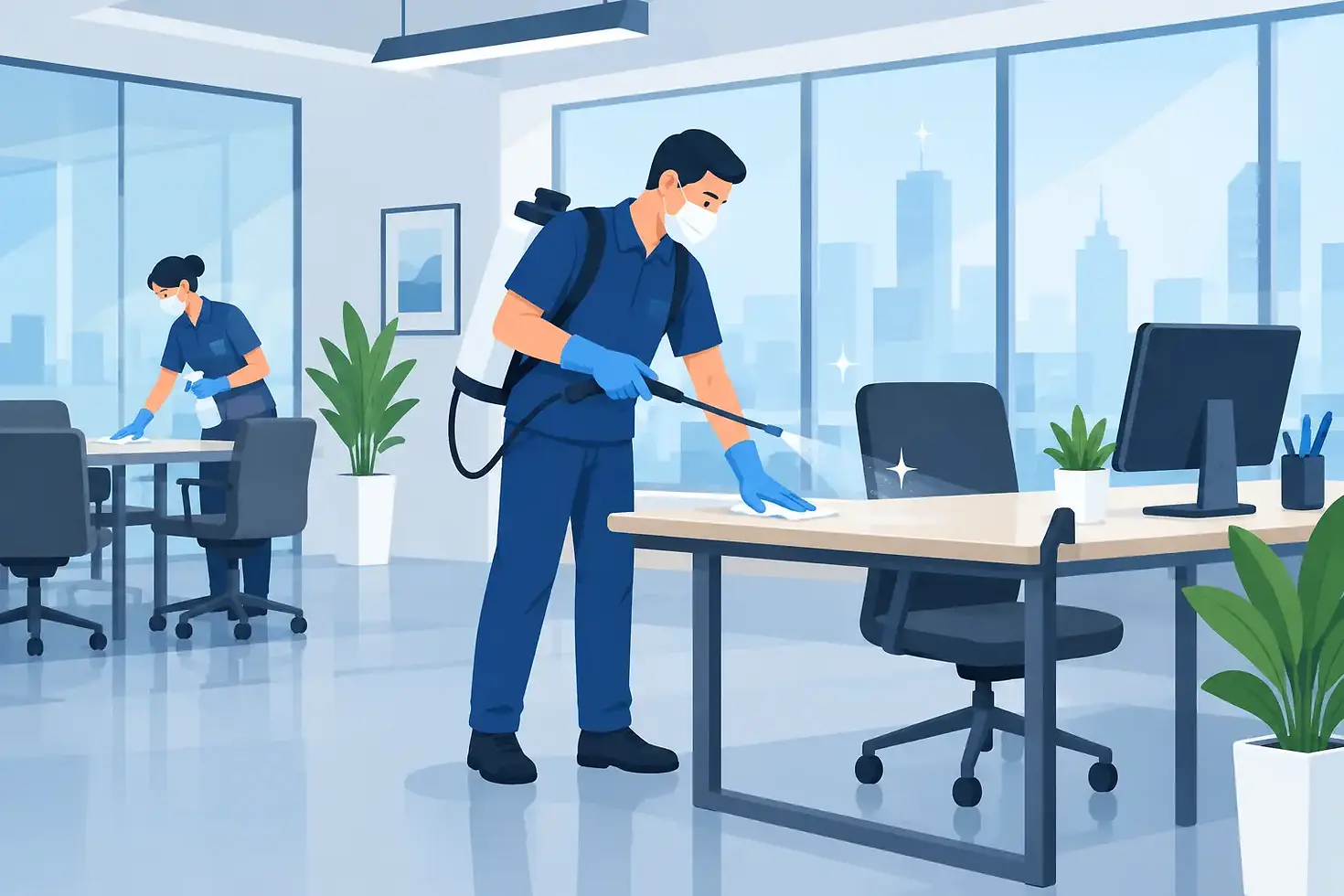
Office Disinfection Service Plans That Work
A busy office can look clean at 9 a.m. and feel neglected by 3 p.m. Elevator buttons, reception counters, pantry tables, restroom fixtures, conference-room touchpoints, and shared equipment all see constant use. Well-designed office disinfection service plans address those high-touch realities without interrupting the workday or treating every area of the building the same.
For property managers, office administrators, and facility teams, the goal is not simply to schedule more cleaning. It is to establish a reliable, documented level of care that supports employee confidence, visitor impressions, and daily operations. The right plan combines routine janitorial detail with targeted disinfection where it matters most.
What an Office Disinfection Plan Should Cover
Disinfection is one part of a complete commercial cleaning program, not a substitute for it. Soil, food residue, dust, and spills must be removed before a disinfectant can perform as intended. That is why a dependable plan begins with thorough cleaning and then applies the right product and process to appropriate hard, nonporous high-touch surfaces.
In an office environment, those surfaces often include door handles, push plates, light switches, elevator controls, desk-side touchpoints in shared work areas, copier panels, breakroom appliance handles, faucet levers, toilet flush handles, and conference-room tables. Reception areas deserve particular attention because they carry a building's first impression and experience traffic from employees, guests, delivery personnel, and vendors.
A premium service plan also accounts for the places that influence how a space feels, even when they are not the primary focus of disinfection. Clean glass at entry doors, odor-free restrooms, detailed baseboards, spot-free fixtures, and well-maintained floors all reinforce that the facility is managed with care. In a competitive commercial setting, presentation and hygiene work together.
How Frequency Should Be Decided
There is no single disinfection schedule that fits every business. A lightly occupied professional office may need targeted high-touch service once each day, while a high-traffic property with shared amenities, rotating staff, frequent visitors, or extended hours may need multiple touchpoint cleanings throughout the day.
The best schedule is based on how the space is actually used. A lobby may need frequent attention even if the offices behind it are quiet. A large conference room used for back-to-back meetings may need service between bookings. Restrooms and breakrooms usually require more frequent detail than private offices because traffic is concentrated and surfaces are shared.
For many New York offices, a practical structure includes nightly janitorial cleaning, scheduled disinfection of high-touch points, and daytime porter support for restrooms, lobbies, spills, and common areas. The exact combination depends on occupancy, operating hours, building layout, and the standard the organization wants visitors and employees to experience.
High-Traffic Areas Need a Separate Standard
High-traffic spaces should not be maintained on the same timetable as low-use areas simply because they are part of the same suite or building. A polished disinfection plan identifies traffic patterns and creates a clear service routine around them.
For example, shared kitchens may need counters and appliance handles cleaned and disinfected after peak lunch use. Building entrances may require repeated attention during arrival and departure windows. In coworking-style layouts, shared desks, phone booths, and meeting rooms can require more frequent service than assigned private offices.
This approach protects the budget as well as the facility. Rather than applying an expensive intensive process everywhere, it directs labor and materials toward the areas with the greatest daily exposure.
The Difference Between Cleaning, Sanitizing, and Disinfecting
These terms are often used interchangeably, but they describe different levels of service. Cleaning removes visible dirt and debris from a surface. Sanitizing reduces certain bacteria to levels considered safer under applicable public-health standards. Disinfecting uses a product registered and applied according to label directions to address specified germs on suitable surfaces.
The distinction matters because the product and method must match the task. A disinfectant may require a specific surface contact time before it can be wiped or allowed to air dry. Applying a product and immediately drying it off can reduce its effectiveness. A trained cleaning team follows manufacturer instructions, uses appropriate dilution where required, and avoids treating delicate materials or electronics in a way that could cause damage.
This is one reason a professional plan is valuable. It brings consistency to an area that is easy to handle inconsistently when it is added as an afterthought to an already busy maintenance routine.
What to Look for in Office Disinfection Service Plans
A service plan should be specific enough that a facility manager knows what is being maintained, when it is being addressed, and who is responsible. Broad promises of a "sanitized office" do not provide the operational clarity needed for a busy commercial property.
Look for a provider that begins with a walkthrough. The walkthrough should identify traffic flow, touchpoint density, restroom count, employee schedules, access requirements, floor types, waste volume, and any sensitive areas such as executive suites, IT rooms, medical-adjacent spaces, or client-facing conference rooms. These details shape the scope of work and help prevent missed expectations later.
A clear plan should also define service timing. Some businesses need after-hours work so desks and common areas are ready before staff arrive. Others benefit from daytime porter service that keeps public-facing areas polished as conditions change. A responsive provider should be able to adjust when an event, tenant move, seasonal increase in visitors, or unexpected spill changes the demands of the facility.
Quality control is equally important. Supervisory check-ins, recurring communication, and a documented escalation process help keep standards from slipping over time. The strongest commercial cleaning partnerships are proactive: a team notices low supplies, a deteriorating floor finish, or a recurring lobby issue before it becomes a complaint.
Protect Floors While Supporting a Cleaner Workplace
Disinfection plans often focus on counters and fixtures, but floor care deserves a place in the conversation. Floors carry in moisture, grit, salt, food particles, and debris that can quickly diminish the appearance of an otherwise well-maintained office. In New York's high-traffic commercial environments, neglected flooring can also become harder and more costly to restore.
Routine vacuuming, mopping, machine scrubbing, carpet extraction, and hard-floor maintenance should complement disinfection service. The right method depends on the surface. Overusing harsh chemistry, leaving moisture on floors, or applying the wrong product to finished surfaces can create avoidable wear, dullness, or slip concerns.
A meticulous provider treats floor care as a specialized discipline. For resilient flooring, that may include periodic scrubbing and refinishing rather than waiting until the surface looks worn. For carpeted offices, extraction can remove embedded soil that routine vacuuming leaves behind. These services help preserve the presentation-ready standard expected in lobbies, corridors, and client-facing spaces.
Common Mistakes That Weaken the Plan
The most common mistake is relying on a generic checklist that ignores how a particular office operates. A checklist is useful, but it should be tailored. If a company has a heavily used training room, a visitor-heavy reception desk, or a breakroom that serves multiple shifts, those areas need a higher service priority.
Another mistake is focusing only on visible surfaces. A spotless desktop means little if door hardware, appliance controls, restroom touchpoints, and shared equipment are overlooked. Conversely, an excessive disinfection routine can be inefficient when it ignores basic cleaning, proper product use, and the actual level of traffic in the space.
Finally, many facilities wait for an issue before reviewing their service level. A better practice is to reassess after staffing changes, expansions, office reconfigurations, construction work, or shifts in tenant usage. Commercial spaces change, and the cleaning plan should change with them.
A Customized Plan Creates Better Daily Results
The most effective office disinfection service plans are built around the facility, not sold as a one-size-fits-all package. They balance visible detail with behind-the-scenes consistency, focus resources where people actually gather, and fit around the hours that keep the business moving.
For offices across Queens, Manhattan, Brooklyn, the Bronx, and Long Island, Top Tier Solutions NY approaches facility maintenance with elite standards, meticulous attention to detail, and service that is friendly by design. Whether the need is recurring janitorial care, daytime porter coverage, deep cleaning, or specialty floor work, the right scope should leave the workplace clean, orderly, and ready for the next business day.
A well-maintained office should never force employees or visitors to wonder whether the space is being cared for. The strongest plan makes that confidence part of the daily experience.


Comments