
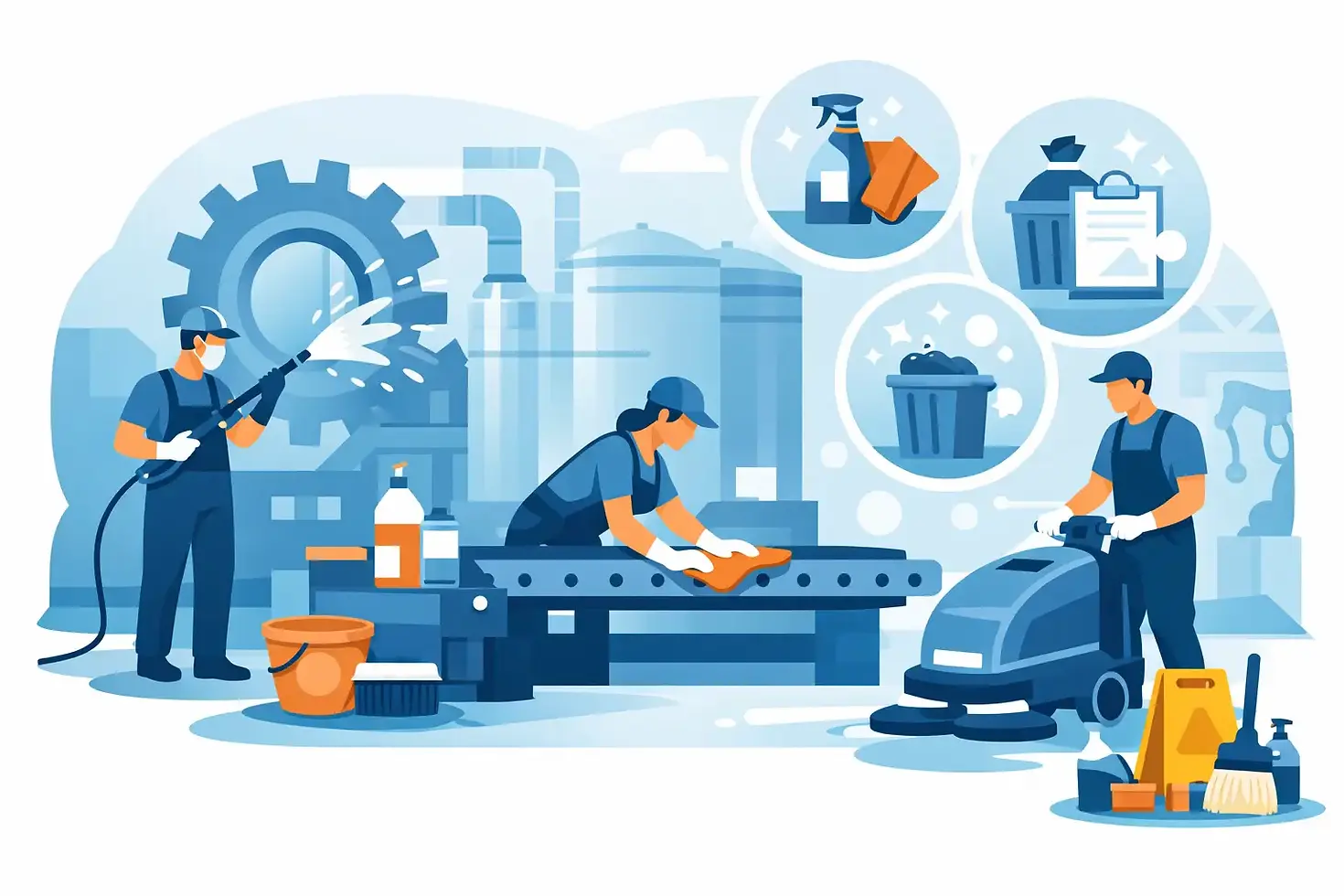
What General Industrial Cleaning Should Cover
A facility can look acceptable at a glance and still be under-cleaned where it counts. Dust on overheads, residue along production edges, neglected floor buildup, and dirty common areas all signal the same problem - cleaning that is too basic for the demands of the space. In practice, general industrial cleaning is not about making a building look better for a day. It is about maintaining a safer, more efficient, presentation-ready environment without slowing operations.
For facility managers, property teams, and operations leaders, that distinction matters. Industrial and light-industrial environments deal with heavier foot traffic, more soil, more wear on floors, and tighter safety expectations than a typical office. A cleaning plan that works in a small corporate suite may fall short in a warehouse, distribution center, manufacturing support area, service corridor, or mixed-use commercial property with back-of-house industrial functions.
What general industrial cleaning really includes
General industrial cleaning covers the routine and periodic cleaning tasks needed to keep a facility orderly, sanitary, and operational. That usually includes floors, restrooms, breakrooms, entrances, high-touch points, trash handling, dust control, and common surfaces throughout active work areas and support spaces.
The exact scope depends on the building. A logistics facility may need constant attention on entrances, warehouse floors, and employee areas. A production support space may need more detailed dust removal, restroom servicing, and cleaning around equipment without interfering with operations. A newly occupied industrial office may need a different mix altogether, with front-facing areas held to a higher visual standard.
That is where many cleaning programs go off track. They treat every industrial account the same, even though traffic patterns, floor types, staffing levels, and business hours vary significantly from one site to the next. A stronger plan starts with the real use of the building, not a generic task sheet.
Why general industrial cleaning affects more than appearance
Cleanliness in an industrial setting has a direct effect on safety and workflow. Dust accumulation can reduce air quality and settle on ledges, fixtures, and equipment surfaces. Spills and tracked-in debris create slip risks. Overflowing trash and neglected restrooms affect employee experience quickly, especially in high-headcount buildings.
There is also the issue of presentation. Many industrial and commercial properties are not purely back-of-house anymore. They may include client walk-through areas, shared entrances, offices, conference rooms, and polished front-facing spaces that need to reflect the standard of the business. When cleaning is inconsistent, that gap becomes visible fast.
Well-executed service also protects assets. Hard floors last longer when they are cleaned with the right machines and maintained on the right schedule. Carpeted office sections hold up better with regular extraction. Restroom fixtures, partitions, and surfaces stay in better condition when buildup is removed before it becomes damage.
The areas that deserve the closest attention
Floors usually carry the greatest burden in industrial environments. Concrete, VCT, tile, sealed surfaces, and entryway systems all collect abrasive soil that gets ground in throughout the day. If floor care is treated as a simple mop-and-go task, appearance drops and wear accelerates. Machine scrubbing, periodic restoration, and spot treatment are often necessary to keep surfaces clean and durable.
Entrances and transition zones are another pressure point. In New York area facilities, weather alone can overwhelm a weak cleaning program. Rain, snow, road salt, and street debris travel into lobbies, service entries, freight corridors, and elevator landings. These are not minor details. They affect first impressions, slip resistance, and how much soil spreads deeper into the building.
Restrooms and breakrooms need a different level of consistency. These spaces are used heavily, judged immediately, and tied directly to tenant and employee satisfaction. A restroom that is cleaned thoroughly once a day may still fail the building by midday if traffic is high enough. In many properties, porter support or multiple touchpoints are the better answer.
High-touch surfaces matter too, but they should be addressed realistically. Handles, push plates, shared counters, railings, and touchpoints in employee areas should be cleaned on a schedule that matches actual use. Some facilities need daytime attention. Others can handle after-hours service. The right frequency depends on occupancy and operational flow.
Building a cleaning scope that fits the facility
The best general industrial cleaning plans are customized, not inflated. More service is not always better. Better-targeted service is better. A well-built scope identifies the surfaces that soil fastest, the areas that shape perception, and the tasks that protect daily operations.
That usually means balancing recurring janitorial work with periodic specialty service. Daily or nightly cleaning may cover trash removal, restroom sanitation, surface wiping, floor care, and touchpoint disinfection. Periodic work may include machine scrubbing, carpet extraction, high dusting, floor stripping and waxing, or deeper detail cleaning in overlooked zones.
Scheduling matters just as much as scope. Some sites need overnight work to avoid disruption. Others benefit from daytime porter coverage because traffic never really stops. In a busy metro environment, responsiveness also matters. If weather, tenant activity, or a construction phase changes the condition of the building, the cleaning plan should adapt without creating a management headache.
Where many vendors fall short
The most common issue is inconsistency. A walkthrough looks strong during the first few weeks, then detail levels slip. Corners are missed. Edges build up. Floor finish dulls. Restrooms are technically serviced but not kept to a premium standard. The problem is not always effort. Often it is weak supervision, rushed labor, or a scope that was never realistic for the property.
Another issue is treating specialty surfaces as an afterthought. Floors especially require precision. Different materials need different chemicals, pads, machines, and maintenance cycles. Using the wrong method can shorten the life of the surface or leave it looking worse over time. That is why experienced floor care is not a luxury in industrial and commercial settings. It is part of protecting the property.
Communication can also break down. Facility teams need a cleaning partner that notices issues early, reports them clearly, and adjusts before small problems turn into larger ones. A reactive vendor creates more work for the client. A proactive one reduces it.
What to look for in a general industrial cleaning partner
A capable provider should understand how to clean active facilities without getting in the way of operations. That means clear scheduling, trained crews, and attention to safety, especially around shared spaces, equipment zones, and high-traffic pathways.
Look for operational specificity. A strong partner can explain how they will handle entrances in bad weather, what floor maintenance schedule makes sense for your surface types, and how they will maintain restrooms and common areas during peak use. Vague promises are easy. A precise scope is what protects results.
It also helps to work with a company that can handle more than routine tasks. Buildings change. A standard janitorial plan may eventually need post-construction cleanup, carpet extraction, concrete polishing, or floor restoration. When one provider can support both recurring service and specialty work, coordination gets easier and the standard stays more consistent.
For many properties in the New York metro area, responsiveness is the deciding factor. Fast-moving buildings need a cleaning partner that can adjust to tenant turnover, weather events, project deadlines, and shifting occupancy without losing quality. That level of service should feel polished, professional, and easy to work with.
General industrial cleaning works best when it is proactive
The strongest cleaning programs do not wait for visible decline. They prevent it. They account for traffic before floors dull out, address dust before it spreads, and support shared spaces before complaints surface. That is what keeps a facility looking controlled, cared for, and ready for business every day.
For property managers and facility leaders, the real goal is not simply checking off cleaning tasks. It is creating a reliable standard across the building - one that supports safety, protects surfaces, and reflects the professionalism of the operation. When general industrial cleaning is built with that level of precision, the difference shows in every shift, every walkthrough, and every first impression.
If your facility has outgrown a basic janitorial checklist, that is usually a sign worth paying attention to. The right cleaning plan should make the building easier to manage, not one more thing to chase.


Comments